Friday, 8 January 2021

On freedom of speech, Big Tech and Ashli Babbitt...

Two pieces caught my eye, this morning, as I was trying to make sense of the strange world we all now inhabit.  The first was by Douglas Murray, on the subject of Big Tech, and their encroachments into the realm of censorship.  I'm a fan of Murray's.  He is a rare example of a clear-eyed thinker in the complex and emotionally-charged times in which we live.  In his piece - published here by the equally excellent UnHerd - he argues that the recent forays of Big Tech towards the censorship of opinions on their platforms that they find unacceptable sets a dangerous precedent.  

His point of departure is the YouTube decision, this week, to axe the channel of the British station TalkRadio, which had featured a number of "lockdown-sceptics" on its shows, thereby (supposedly) contradicting the "approved" government narrative on Covid.  Murray goes further, however - as one might expect.  The main tech platforms, he argues, such as Facebook, Google or Twitter, wield a power that far outweighs that of any publisher the world has ever seen, exercising "more control over information than any group of people in history".  With great power, of course, comes great responsibility, but one has to wonder if the Googles of this world are up to this complex task.  Is it even possible for a tech platform to keep a check on the content that is being published on its pages?  And, if so, is it ethically justifiable?  I hate conspiracy theorists as much as any sane individual, but the idea of censoring ideas and discussion sits uncomfortably with me.  And, on a deeper level, one must ask: who polices the internet police?  Who should decide what is "unacceptable", and what isn't?  A Google intern?  Nick Clegg?  

Of course, the counter argument is that those platforms are businesses, not a universal human right, and they have the power to decide what they publish and what they don't.  But, given their enormous power, I wonder if that defence can be allowed to stand unchallenged?  For those that would like to dismiss such concerns as merely peripheral, a glance at the coverage of the Hunter Biden story just prior to the US election last autumn might serve as a healthy corrective.  I'm no fan of the oafish soon-to-be-ex-President Trump, but the active media and tech censorship of a news story that might have damaged his opponent stank to high-heaven, and is not the sort of thing that one would expect to see in a mature democracy.  

Murray's conclusion to this conundrum, unsurprisingly, is freedom; that the debate should be as wide as possible.  My argument on this has long been that crazy ideas should not be censored, and thereby driven underground to bask in the furtive glamour of the banned shadows, but instead should be exposed to debate, and if necessary ridicule.  Isn't that the way that knowledge progresses - through ditching the bad ideas and adopting the good?  Look at the example of Copernicus?  Isn't "heresy" sometimes a healthy corrective? 

But, then, as I read Bellingcat's investigation of the life arc of Ashli Babbitt - the protestor shot and killed in the storming of the Capitol in Washington this week - I checked my libertarian impulses.  The article - which is here - charts the political journey of a young woman, a 35-year old Air Force veteran, from an Obama voter in 2012 to a pro-Trump protestor, who in 2021 paid for her protest with her life.  By looking back at Babbitt's own Twitter postings, Bellingcat recreate her "journey": her rejection of Hillary Clinton in 2016, to her posting of more explicitly anti-establishment messages in 2019, to the rabbit-hole of conspiracy theories purveyed by the likes of QAnon.  "Nothing can stop us" she wrote in her last Twitter post, "The storm is here". 

It's hard to know what role Babbitt's environment, family and friends may have had in her radicalisation.  Did they share her views?  challenge them? or maybe just roll their eyes and move the conversation on?  Perhaps time will tell, perhaps not.  But that journey is clear to see on her Twitter feed, and it's hard not to conclude that it was primarily online that the ideas that spurred her on - the conspiracy theories about the stolen election - were amplified in a host of online echo-chambers.  

Does this not change things?  That an ordinary American can be so moved by conspiracist nonsense that she would storm her own parliament building and lose her life in the process? Shouldn't that make us pause?  I don't know the answer, and - of course - as soon as we go down the road of censorship then all the ethical questions raised above very quickly apply.  But, given the proliferation of online conspiracy theories, and of the platforms that share and amplify them - one has to wonder if the old idea of "publish and be damned" is still fit for purpose. 

Monday, 17 August 2020

Warsaw 1920 - the Battle that saved Europe from Communism ... and you've probably never heard of it.


It’s a scenario that will seem quite familiar to us today.  A revolutionary rogue state, bent on world domination, spreading its ideology and influence as far as it can, by fair means or foul. But, 100 years ago this month, it was revolutionary Russia that was hitting the headlines for its expansionist ambitions, and it was Poland that stood in its way.

Viewed from a British perspective, it is easy to imagine the interwar period – with the Jarrow March, the General Strike and the Great Depression – as one characterised primarily by economic rather than military challenges.  Yet, for much of central Europe, the time after the end of the First World War was marked by conflict: states emerged, or re-emerged, and frontiers were redrawn, often with violence.  To paraphrase Churchill’s pithy quip: the War of the Titans gave way to the War of the Pygmies. 

Though largely forgotten in Britain, the most significant, and long-lasting, of those wars was the Polish-Soviet War, which raged for 18 months from the spring of 1919.  It had its origins in the standard frontier squabble.  Poland, re-emerging after 123 years of absence from the map of Europe and capitalising on the chaos then engulfing revolutionary Russia, was seeking to push its eastern frontier as far as possible to incorporate as many formerly-Polish lands as it could. 

In this way, the Poles reached – and took – Kiev in the spring of 1920, but that was to prove their high-water mark.  The Soviet counter-offensive that followed pushed them back, and kept pushing, spurred by the humiliation that a Polish invasion provoked. 

Soviet successes soon bred grander strategic aims.  Survival morphed into expansion.  Lenin, only newly ensconced in the Kremlin, was acutely aware of the need to expand the communist system – not only to help realise Marx’s universalist ambitions, but also to secure the revolution at home.  His Red Army, now advancing westward, was the ideal vector: communism would be exported on the tips of its bayonets.

In that ambition, Germany was seen as key.  Lenin knew that the success of the communist revolution in Russia was ideologically anomalous.  According to Marxist doctrine, communism was supposed to be the scientifically inevitable product of the collapse of the capitalist system; it was meant to occur in those countries with a highly developed industrial sector and a highly politicised proletariat.

Russia fulfilled neither of these criteria, of course, but Germany – then wracked by the political fallout of its defeat and collapse at the end of the First World War – was the perfect candidate, and appeared to be ripe for revolution.  That spring had already seen both a left-wing revolt in the Ruhr, and an attempted coup by the right – the Kapp Putsch – seek to seize power in Berlin.  The arrival of the Red Army on Germany’s eastern frontier would most likely have doomed the nascent Weimar Republic to an ignominious cot-death.

So it was that, as the Red Army approached Warsaw that summer, it was assumed that the Poles were already beaten, and the next target was already in Lenin’s sights.  As the order of the day to Red Army troops put it: “Over the corpse of White Poland, to worldwide conflagration!”  It was a fair assumption.  Polish forces were falling back in disarray, driven into retreat by the blood-soaked proto-Blitzkrieg of the Red Army’s Konarmia, the “Red Cavalry”.  Brest-Litovsk fell to the Soviets on 1 August, Lwów was already under siege. Warsaw appeared to be next.

Internationally, the constellation was little rosier.  German dockworkers in Danzig went on strike rather than unload ammunition bound for the Poles.  French socialists declared their opposition to “reactionary and capitalist Poland”, as did their confrères in Britain, spurred by the armchair revolutionaries of the “Hands off Russia” campaign.  When the government in Warsaw published an “Appeal to the World”, in early August, explaining the dangers of a Bolshevik invasion of Europe, it fell largely on deaf ears.  Only a small group of French military advisors – including a young Charles de Gaulle – arrived in the capital seeking to stiffen Polish resolve.

Not that Polish resolve needed much stiffening.  With a Soviet “Revolutionary Committee” waiting in the wings, and secret policemen and “requisitioning agents” running amok in those areas already under Soviet control, the grim realities of Soviet rule were brutally evident.  Poland’s very survival appeared to be at stake.

The end, when it came, was brutally swift.  After the Red Army spearhead’s advance was checked at Radzymin, to the east of Warsaw that August, a Polish counterattack drove northward into the overextended Soviet flank, finally defeating the Red Army in a ten-day engagement, which would cost around 20,000 lives.  Known to Poles as “The Miracle on the Vistula”, the battle not only relieved the capital, it routed Soviet forces, scattering them north into East Prussia and Lithuania. 

With that, the Soviet front collapsed, and the Kremlin finally sued for peace.  Lenin’s drive to spread communism westward to Germany and beyond was halted – for a generation – and Poland’s independence was secured – again, for a generation.  Germany, too, was temporarily saved from the horrors of totalitarian revolution.

Few outside Poland – at the time, or since – have fully appreciated the significance of the Battle of Warsaw.  One of those who did was Edgar Vincent, 1st Viscount D’Abernon, a prominent businessman and MP, who was a member of the Allied advisory mission that had arrived in Warsaw that summer.  Writing later about the importance of the Polish victory at Warsaw, he was categorical, stating that, had the Poles “failed to arrest the triumphant advance of the Soviet Army at the Battle of Warsaw, not only would Christianity have experienced a dangerous reverse, but the very existence of western civilisation would have been imperilled.”  No surprise, perhaps, that the battle is remembered in modern Poland as the Cud na Wisłą, the “Miracle on the Vistula”. 

Sometimes it is useful to be reminded of historical precedents; particularly so in times of crisis, when present tribulations can seem overwhelming.  History doesn’t repeat itself, of course, but it can provide echoes and patterns, which often serve to inform our understanding.  The Battle of Warsaw is just such an example; a reminder that – though circumstances can change – existential threats are nothing new, and moreover, they are not unavoidable; deliverance can come from an unexpected quarter.  For these reasons alone, it is very much worth remembering. 


©Roger Moorhouse 2020

Tuesday, 12 December 2017

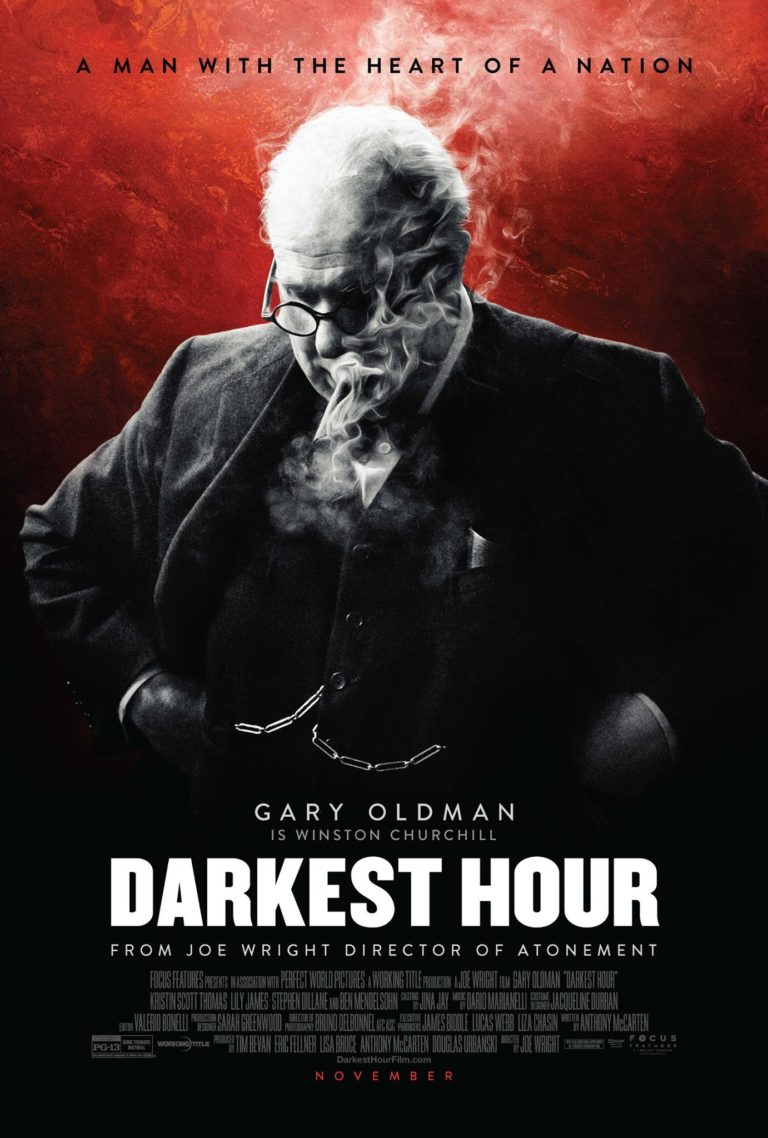
"Darkest Hour" - a review

I was very pleased to be invited to the UK premiere of "Darkest Hour" last night in London.  The film by Joe Wright, with Gary Oldman as Churchill, broadly follows the circumstances of Churchill's accession to the post of Prime Minister in May 1940, as military reverses in France forced the previous incumbent, Neville Chamberlain, from office.

I have to say - the film is beautifully shot, with a few nice directorial touches, and as such is very convincing.  1940s London appears to have been faithfully reconstructed for our amusement.  Oldman is excellent as Churchill - all grunts and jowls and rheumy eyes - only once, briefly, did the mask seem to slip.  I would predict that he will certainly be a contender for major awards with this performance.

The supporting cast were all excellent - Kristin Scott-Thomas was brilliant as Clemmie, and Stephen Dillane stood out as the cadaverous, scheming Halifax.

I'm not minded to judge the film on its historical accuracy - it is an entertainment, and so plays a little bit loose with the tumultuous events of the summer; overegging the power of the 'peace party' (I would say) and exaggerating Winston's wobble (I've never thought that he lacked faith in his own opinions).

However, aside from that, one passage seemed very out of place to me.  The underground scene, where a desperate Winston takes a trip on the London Underground to 'consult' the Great British public on what his approach should be, or (to be generous) on the rightness of his instincts...  This, to me, was a nonsense...  An a-historical projecting back of our modern populist instincts.  Also the bit where he read out the names of those he spoke to and cited their opinions was all too much like Jeremy Corbyn's ridiculously twee referencing of "Muriel from Barnsley" in the House of Commons.   I may be wrong, but I don't think the passage fitted the tenor of the film, nor did it chime (in my opinion) with the Churchill of historical record.

Anyway - that aside - "Darkest Hour" was a good, largely convincing film.  Oldman deserves every gong going for his performance and overall - i'd give it a B+. 

Saturday, 18 February 2017

Hacksaw Ridge - a hurrah for the forgotten heroes of war

My grandfather - Capt. Stanley Millar - was in the RAMC (Royal Army Medical Corps) during World War Two.  Already a GP before the war, he joined up in 1939 and served right the way through - France 1940, North Africa, Italy, and back into France in 1944.  I've often idly wondered what it must have been like for him; patching up all those injured young men, agonizing over those that he couldn't save.  However, sadly for me - as I suspect for most of us - the role of army medics is one that gets so little air time in the conventional narrative, that it is often hard to imagine what they went through.

That said, I don't imagine for a moment that my grandfather went through anything like the horrors experienced by the subject of the new film "Hacksaw Ridge".  Set mostly during the battle for Okinawa during World War Two, the film tells the true story of Desmond Doss; a young, Virginian, Seventh Day Adventist, who joins up out of patriotic fervour after Pearl Harbor, only to discover that his devout faith forbids him from handling a weapon.

After much wrangling with the military authorities, Doss qualifies as a combat medic with the 77th Infantry Division; thereby squaring his faith with his desire to serve his country.  What followed would have made lesser men wish they had stayed at home.  In real life, Doss served in the Philippines and on Guam, but the film jumps straight to his service in the Battle for Okinawa in the summer of 1945 - specifically to the battle for the Maeda escarpment; known to the Americans as "Hacksaw Ridge".

As one might expect, the battle scenes in the film are not for the faint of heart - they are graphic, visceral and extremely brutal.  Throughout, however, the unarmed Private Doss (played brilliantly by Andrew Garfield) scampers around the battlefield saved those that can be saved.  Most impressively, after a Japanese counter-attack forces the Americans off the ridge, he stays behind - risking certain death if discovered - to tend to the remaining wounded.  In this way, it is estimated that Doss saved some 75 American lives, including that of his commanding officer, before he was himself injured and evacuated.

The real-life Desmond Doss
Hacksaw Ridge is a quite astonishing film, which gives us a rare glimpse into the horrors experienced by the forgotten heroes of the medical corps - men who went into battle with the task of saving lives when all around are trying to take them.  The film ends with the - now rather commonplace - film footage of interviews with the real-life characters.  You will not leave the cinema dry-eyed.

In recognition of his actions, Doss was awarded the Medal of Honor in 1945 - the first conscientious objector to be so honoured.  He died in 2006.
And, what of Stanley?  He came home from the war, but was evidently never the same man he had once been.  He started drinking, was struck off, got divorced and ended up taking his own life in 1973.

Thursday, 1 December 2016

Martin Bormann - and the flight from common sense

One of the effects of the return of the execrable crudfest that is "Hunting Hitler" is that all manner of conspiracists come out of the woodwork - on Twitter and elsewhere - to air their preposterous theories, in sympathy with the nonsense spouted by the dubious "experts" that front the show.

In amongst that cornucopia of claptrap is a long-standing piece of idiocy regarding Martin Bormann.

Martin Bormann
a master of horticultural deception
- or not...
Allow me to elucidate...  Martin Bormann - Hitler's Party Secretary and the 'eminence grise' of the Third Reich - was last seen alive on 2 May 1945 by Hitler Youth leader Artur Axmann. Together with Bormann, Axmann had been part of a group that have left the Reich Chancellery Bunker and had headed north on Friedrichstrasse, reaching the Spree at the Weidendammer Bridge. Soon after, Axmann left the group before doubling back on himself.  Then, he claimed to have seen the bodies of both Bormann and SS doctor Ludwig Stumpfegger, not far from the Lehrter Station.

Aside from Axmann's story, however, no other contemporary account of Bormann's fate was ever given. He was tried 'in absentia' at Nuremberg, and declared legally deceased in 1954, despite the fact that the West German government continued looking for him - officially at least - until 1971.

Then, in 1972, construction workers near the Lehrter Station in Berlin discovered the remains of two men, who were identified through dental records to be Bormann and Stumpfegger.  With the development of new technology, in due course - in 1998 - Bormann's remains were conclusively identified to be his via DNA testing, providing a match to his son Martin Bormann junior.  With that - for most sane individuals - the Bormann story draws to its definitive end.  Martin Bormann died, on 2 May, close to the Lehrter Station in Berlin...

But - according to our conspiracist friends - there is a twist.  They maintain that Bormann's remains contained traces of a red soil that is not native to Berlin.  Instead, they say, the soil is the same as that of some region of Paraguay or of Argentina...  Cue dramatic music..  Dun dun daaaa...

Bormann's body was passed to his heirs after the DNA tests were carried out and was cremated, so this theory is impossible to test - even if we would wish to.  However, let us just think of the logical implications of this daft theory for a moment...

The conspiracists' story would run as follows.  Bormann - far from dying on 2 May in Berlin - somehow escaped the Nazi capital and went to live in South America.  Then, when he died, his body was presumably buried, in Paraguay (or elsewhere), then exhumed, packaged up, and taken back to Berlin by persons unknown and surreptitiously reburied close to the Lehrter Station, not far from where he had last been seen in 1945, so as to give the world an alibi; to cover up the 'fact' that Bormann had escaped. And all this happened without the people involved being intercepted by the German or Paraguayan authorities or being spotted or betrayed by anyone...

(Oh - as an aside - One question for the conspiracist cretins - what about Stumpfegger? Did he go to South America too? So, was he also flown back to Berlin after his death? Or did he actually die in 1945 and those persons unknown had some secret knowledge of where he was buried so that Bormann could be carefully placed next to him?  I think we need to know!)

Hmm.  Forgive me for being a spoilsport - but every fibre of my being is crying out that this cockamayme tale can only be arrant horseshit.  Is it not just possible that Bormann died and was buried IN BERLIN, IN 1945, a few yards from where he was last seen?!  Is that not a more logical solution to the conundrum? Is it not infinitely more logical than the idea that he escaped to South America, died, was buried, was exhumed, flown back to Berlin, and reburied, close to where he had last been seen...?

I know that conspiracy theorists have - by definition - a tenuous grasp of concepts like "logic", "facts" and "probability" - but Jeez...

It would not surprise me in the least if this idiotic tale gets an airing in the current series of Hunting Hitler - but then again idiocy and conspiracy theories often travel hand in hand...


Wednesday, 19 October 2016

"1944 - Forced to Fight" - a historian's review

The Estonian film "1944" was released to huge acclaim in 2015 and was submitted as that country's entry for the 2015 Academy Awards as best foreign film, has now been released in the UK (with subtitles), under the title "1944 - Forced to Fight".

It is set against the backdrop of Estonia's unenviable fate during World War Two, stuck as it was between the rock of Nazi Germany and the unmovable object of Stalin's Soviet Union.  Those that have read my book "The Devils' Alliance" will know some of the horrors endured by the Baltic States during this period.  For the uninitiated, a thumbnail sketch: this was a time in which is was quite possible for a single family to have parents exiled to Siberia by Stalin in 1940, have an elder son drafted into the Red Army the same year, and a younger son conscripted into the Waffen-SS in 1944.  On our comfortable little island, with its clear moral narrative of World War Two, such complexities can be hard to fathom.

Yet, "1944 - Forced to Fight" explains them very ably and succinctly.  It focuses on two individual soldiers - Karl Tammik and Juri Jõgi - who find themselves on either side of that divide; one fighting for the Germans, one for the Soviets.  Like most of their countrymen, neither shows any particular ideological fervour, except the desire to escape the madness and go home.  Their story plays out during a few months of the Red Army's advance into Estonia - between the Battle of the Tannenberg Line and the fighting on the island of Saaremaa - in the late summer and autumn of 1944.

I won't spoil the story for readers by giving away the narrative strands that link the two principal characters, but suffice it to say that the film is one of the best World War Two films I have seen.  It is well acted - with excellent characterisation (even through the medium of subtitles), the combat scenes are as riveting and harrowing as they are authentic, and the central narrative brilliantly displays the impossible predicament that the people of Estonia - and their Baltic neighbours - found themselves in during the war.

See it - you won't regret it.


Tuesday, 11 October 2016

"Blitzed" by Norman Ohler - a historian's review

Hitler - cynics say - is the gift that keeps on giving.  He still holds us all, it seems, in his awful thrall.  We are fascinated and appalled by him in equal measure.  But we should perhaps also be grateful - grateful that, where once he inspired genocide and war, now he just inspires occasionally dodgy history.

This last week saw the publication in the UK of "Blitzed: Drugs in Nazi Germany" by German author Norman Ohler.  The PR campaign here in the UK was immense.  Perhaps it was the book's heady combination of "Hitler" and "drugs" that did it; catnip to the media - but it received prominent reviews in the press, alongside a "news" item on the BBC website, which amounted to little more than a breathless extended plug by the author.  Nonetheless, after the book's success when published in Germany last year, I was keen to see it, hoping for a treatment of the subject that would be typically 'Germanic' and thorough.

Ohler's thesis is twofold.  Firstly, he suggests that Hitler himself was addicted to the cocktail of drugs supplied to him by his personal physician; Theodor Morell, which included cocaine, the morphine-derivative Eukodal, and Pervitin; a form of methamphetamine.  This addiction, he says, had political and military consequences, as Hitler's sense of invincibility and his inability to see reason grew unchecked, and - in 1945, when he struggled with the consequences of withdrawal.

The second strand of the book is that - despite Nazism's official disapproval - drug use was actually rather commonplace during the Third Reich and in particular that the use and abuse of Pervitin was widespread, especially in the military.  Pervitin - which induced feelings of euphoria, alertness and diminished inhibitions - was certainly exploited by the German armed forces, and Ohler says, seems to have played a key role in the early successes that are so often attributed to the tactical genius of the Blitzkrieg.

Both these subjects are well worthy of historical examination, yet - for all the hyperbole - neither is entirely new.  Hitler's drug habits have often been discussed in detail - in (for instance) Leonard Heston's "Medical Casebook of Adolf Hitler" from 1979 or Ernst-Gunther Schenck's "Patient Hitler" from 1989.  In addition, it is a subject that has been discussed - at least in passing - in all the Hitler biographies, including Alan Bullock's "Hitler: A Study in Tyranny" from 1952.  Hitler's drug use has even been the subject of a couple of low-rent TV documentaries in recent years. Ohler's claim to novelty on this therefore, should be taken with a considerable pinch of salt.

Where Ohler is rather more novel is in his claims that Hitler was addicted to the cocktail of drugs that he received.  Of course, the honest answer is that we can't know for sure as there is not enough evidence to be had - but I think it is telling that more circumspect commentators - such as Schenck, who was an SS doctor - have concluded that, as far as the evidence allows a conclusion to be drawn, Hitler was most probably not addicted to any of the substances that he was given.  Nonetheless that doesn't stop Ohler from jumping to his sensational conclusion not only that Hitler was addicted, but that the addiction had political and military consequences.

The material on the use of Pervitin - though less spectacular than the tales of Hitler's supposed addictions - is rather more interesting.  Certainly Pervitin use appears to have been widespread before and during the war, particularly in the military - and this has also been written about before - but again Ohler overplays his hand by making some claims for pharmacological explanations for military events that are scarcely sustainable in the sober light of day.

Stylistically, "Blitzed" is very readable; Ohler has written novels previously, and it shows.  But, while his story rattles along well, he rather struggles with the requirements of serious non-fiction.  The twin strands of his narrative are imperfectly spliced, and he undermines his own credibility by adding a smattering of contemporary drug-related words "junkies", "high", "doped up" throughout his narrative.

In sum, there is some engaging and enlightening material here - but very little that has not been said before elsewhere.  All that is provable isn't new; and all that is new isn't provable.  "Blitzed" is certainly sensational - but whether it is good history or not is another matter.


Thursday, 15 September 2016

"Anthropoid" - a historian's review

Bloody typical!  You wait 40 years for a film about the wartime assassination of Obergruppenfuehrer Reinhard Heydrich, and then two come along at once...! 


The first of these - "Anthropoid" - I saw last night.  And it is very good. 

It follows the story of Heydrich's two assassins - Jan Kubiš (Jamie Dornan) and Jozef Gabčík (Cillian Murphy) - from their arrival in occupied Czechoslovakia, parachuted in courtesy of SOE, to their deaths at the hands of the Germans in the aftermath of their successful killing of Heydrich. 

Of course, my primary concern was that the history is not played with too much, and in this regard the film certainly did not disappoint: production values were excellent and it had the all-important whiff of authenticity: the Germans spoke German and the Czech accents were maintained throughout - indeed some of the actors - such as the luminous Anna Geislerová - are themselves Czechs. The narrative, too, did not noticeably stray from the historic one - every aspect was there; the betrayal, the cyanide, the razing of Lidice - even the head in a bucket... 

Historically then, "Anthropoid" is pretty much faultless. Dramatically, too, it is very strong.  It is structured, effectively, as a long crescendo, climaxing with the deadly siege at the church.  This generally works well, though the first half of the film - with scene setting, characterisation etc - was a tad slow. Murphy and Dornan were very convincing as Gabcik and Kubis, though the characters might have been fleshed out a little more - even allowing some artistic licence - and the tensions between them and the domestic resistance might have been turned up a notch.

Nonetheless, that is a minor criticism.  Overall, "Anthropoid" showed how history can be translated brilliantly to the big screen without excessive compromise in terms of historical accuracy.  It is well worth a watch. 

The other Heydrich-assassination-themed film, by the way, is the adaptation of the Laurent Binet novel "HHhH" - which is due for release later this year. 


Friday, 29 April 2016

Was Hitler a Zionist?

Yesterday, British politics was plunged into an improbable, yet nonetheless frenzied discussion of Adolf Hitler and Zionism.  Despite the multifarious threats of ISIS, the Migration Crisis, the EU's slow-motion car crash and the faltering world economy - journalists were quoting Mein Kampf and dissecting the finer points of Hitler's policies towards the Jews.

The reason for this rather preposterous state of affairs was the veteran left-wing politician, Ken Livingstone, who - on riding to the support of a Labour MP, Naz Shah, who was exposed as having made anti-Semitic remarks - successfully poured fuel on the flames.  Apropos of not very much, he said in a radio interview:

"Let’s remember when Hitler won his election in 1932, his policy then was that Jews should be moved to Israel. He was supporting Zionism – this before he went mad and ended up killing six million Jews."

Now, given the obvious historical ignorance on show in that sentence - Hitler didn't "win" an election, he was appointed Chancellor in 1933, he didn't "go mad" and Israel was not established until 1948 - it is perhaps surprising that Livingstone's suggestion that Hitler supported Zionism was given any credence at all, but the press (and others) nonetheless had a field day.  So let's give the subject the once over.

Hitler was an anti-Semite.  He was an ingrained and impassioned anti-Semite.  Anti-Semitism was the guiding principle of his political life and it ran through his career like the text in a stick of seaside rock.  Hitler's primary political ambition was to remove the Jews from Germany.  As we all know, this he would later do by extermination in the Holocaust - but in the early years of the Third Reich, he sought to do it by "encouraging" emigration; making conditions for Jews within Germany so bad through boycotts, purges and persecution, that they would opt to leave of their own accord.  In this, indeed, he was relatively successful.  Between 1933 and 1939, the Jewish population of Germany fell from over 500,000 to little over 200,000, with German Jews finding refuge across Europe and the wider world.

Some of those emigrants found their way to British Mandated Palestine - or, as Ken Livingstone would put it: "Israel".  Indeed, there was a scheme in place called the Ha'avara Agreement, made in 1933 between the new Nazi government and Zionist German Jews, to facilitate emigration to Palestine.  It required the payment, up front, of a £1,000 fee, which would be used to effectively 'purchase' the possessions of would-be emigrants, thereby neatly getting around the fundamental problem that the Nazis did not allow German Jews to remove their property and wealth from the country.

This shakedown of the desperate might feasibly be what Livingstone was referring to when he stated that Hitler "supported Zionism".  But, there are a number of caveats that he should perhaps have borne in mind.  For one thing, Hitler was no fan of the Ha'avara arrangement, fearing that the Jews - if concentrated in Palestine - would simply form a new outpost of his imagined "Grand Jewish Conspiracy".  Neither were all German Jews "Zionists" - Zionism was a particular strand of Jewish political thought and was by no means shared by all German Jews, even in the increasingly perilous situation that they found themselves in the 1930s.  Also, the British in Palestine were far from enthusiastic about encouraging a wave of Jewish emigration that would be bound to upset their fractious province.  In addition to all that, the up front costs of the Ha'avara deal meant that many German Jews were unable to take up the offer, even had they wanted to.  In the end, some 50,000 German Jews used the scheme, barely one in six of the total that left Germany between 1933 and 1939.

So, there was a Zionist arrangement of sorts with Hitler's Germany - but to conclude that Hitler therefore "supported Zionism" is not only historically inaccurate, it is historically illiterate.  But then, this particular storm in a teacup was never really about history. It was just a crude, rather cretinous attempt to smear by association.

Monday, 15 February 2016

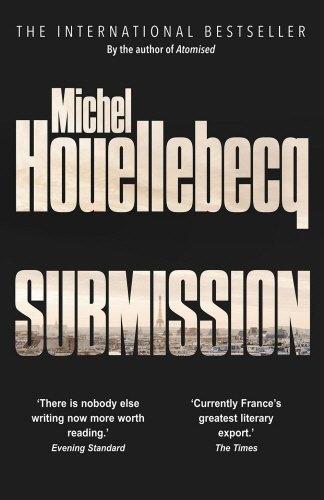
Houellebecq - "Submission" - a review

On the day that Michel Houellebecq's controversial new novel Soumission ("Submission") was published in France last year - January 7 - Islamist cretins chose to attack the offices of the satirical magazine Charlie Hebdo - murdering 12 people.

As publicity stunts go, this must top the lot.  "Submission" is a dark tale, set in 2022, in which France is taken over by a Socialist-Islamic coalition, including the supposedly moderate Muslim Brotherhood, under the presidency of the charismatic Mohammad Ben Abbes, and joins the Umma - it becomes an Islamic State. 

Our guide through this new world is a middle-aged academic at the Sorbonne named Francois.  Francois is very French: world-weary, single, somewhat sex-obsessed but otherwise full of ennui.  Released by the University, as a non-Muslim, he watches events with a cold eye, a very dispassionate observer of France's Islamisation.  Throughout, Francois's thoughts are interspersed with literary references, some rather arcane, many referring to our hero's pet subject; the 19th Century novelist Huysmans.  It is all strangely gentle, and very French.

Somewhat predictably, Houllebecq has been accused of Islamophobia in writing the novel.  Yet, the honest reviewer would have to conclude that there is nothing remotely critical of Islam in it.  Indeed, the supposed 'attractions' of the faith - not least polygamy and Middle Eastern petrodollars - play a crucial role in turning our protagonist's head.

So, this is no fire and brimstone, nativist call to arms. Far from it.  If there is a target for Houllebecq's ire, it is very much the Francois of this world, rather than the Muslims.  Instead the book is a rather thoughtful exposition of how such a turn of events might come to pass, and how western populations - full of rootless, materialist, ennui-laden individuals like Francois - might meekly acquiesce.  Or submit.

On that point, Houllebecq may, regrettably, be proved right.  Western societies - stripped of any remaining pride in their own nations or their own traditions - may well fall victim to political and religious colonization in the way that he describes - supinely, with little more than a Gallic shrug.

But on another point, Houllebecq is almost certainly wrong.  As the bloody events at Charlie Hebdo demonstrated - on the very day that this book was published in France - a Muslim takeover is unlikely to be peaceful.

This book was never going to be anything less than controversial - but it is well worth reading, if nothing else as a reminder of how fragile so-called "Western Liberal Civilization" might prove to be.


Monday, 26 October 2015

"Nothing is True and Everything is Possible" by Peter Pomerantsev - a review

There is a discomforting moment in Peter Pomeratsev's brilliant book "Nothing is True and Everything is Possible" when it dawns on the reader that this really isn't funny any more.

The book - subtitled "Adventures in Modern Russia" - is a journalistic survey of a dysfunctional, corrupt kleptocracy.  Through his work as a TV journalist, Pomerantsev has collected numerous vignettes - many of them bizarre and darkly comic - which colour the picture that he paints of Putin's Russia.  Of course, it is by definition a pointillist picture, where a single anecdote is mobilised to tell a wider narrative, but it is no less convincing - or terrifying - for that.

Pomerantsev opens with the seemingly ubiquitous Russian "gold-diggers", ordinary girls from the provinces who hunt down eligible (for "eligible", read "rich") men in the night-clubs of the capital, looking for a sugar daddy, perhaps even a role as a trophy wife.  They are devious and determined.  Honing their performance as required, from quoting Pushkin and pontificating about modern art, to tottering on the highest of heels. There are even, he tells us, a network of schools and advisers training the girls in the best way to attract (and supposedly keep) what they call a "Forbes", named after the American business magazine which regularly lists the world's richest men. It is all a very long way from "Romeo and Juliet".

From such almost comical beginnings, Pomerantsev moves into progressively darker territory.  For instance, he tells the story of Ruslana Korshunova, a highly-successful Russian supermodel, who committed suicide aged only 20 when she threw herself from the balcony of her 9th floor Manhattan apartment. After dismissing the usual peril of drugs, Pomeratsev suggests that the cause of her death as her involvement with a curious Russian cult - "The Rose of the World" - which dehumanized its members through emotional disorientation and humiliation.  One of Ruslana's last posts on social media said "I am so lost. Will I ever find myself?"

Or consider the dark tale of Yana Yakovleva, the co-owner of a chemical firm who - after resisting official extortion attempts - was arrested on trumped-up charges and sent to prison on remand, where she spent 7 months.  It is a fascinating, terrifying chapter; with echoes of Kafka and of Arthur Koestler's "Darkness at Noon" - the prisoner seemingly impotent and cast into a parallel universe where black is white and nothing is as it seems.

Yet, if the reader was consoling themselves that such horror stories of abject national malaise were confined to Putin's Russia, the last chapter of the book shows that the contagion is spreading.  Through the sorry stories of Boris Berezovsky, Bill Browder and Sergei Magnitsky, Pomerantsev shows how Russian corruption is spilling beyond national boundaries.

We like to kid ourselves, Pomerantsev tells the reader, that the reason that Russia's oligarchs like to congregate in London, or Paris or New York is that they fundamentally aspire to be like us - that we might adopt a civilizing, democratizing role - that we might somehow play the Greeks to their Romans...  This, however, is wishful thinking, says Pomerantsev: It is not we who are influencing them - from the politicians turning a blind eye to money-laundering, to estate agents unconcerned by high-rolling Russian buyers - it is they who are influencing us, and not for the better.

This is a brave, terrifying, depressing book, which deserves to be read.

Thursday, 24 September 2015

Volkswagen - founded by the Nazis - felled by eco-fibbing


The emissions scandal that has engulfed Volkswagen this week is a reminder of the precariousness of even the most apparently established brands in the modern marketplace.  Just as a misjudged aside at a conference sank Gerald Ratner’s jewellery business in 1991, so it seems some eco-fibbing might just torpedo the second largest car manufacturer on the planet.

All of which is rather surprising, when one considers Volkswagen’s thoroughly toxic early history.  Given the almost reflexive opprobrium that is (rightly) directed at companies tainted by association with the Third Reich, is it not astonishing that a company established by the Nazis to build a car that was in integral part of Hitler’s social project – should have survived at all?

Hitler examining a model Volkswagen
Volkswagen was set up in 1937, at Hitler’s command, by the Nazi DAF; the ‘German Workers’ Front’, itself a nazified substitute for the smashed trades unions.  Given that cars were very much luxury items in Europe in the 1930s, Volkswagen’s brief was to design and build a “People’s Car” – that’s what the name means in German – a budget model, which would be priced to be affordable for the average household. and could carry a family of four at 100kmh.  Hitler himself was said to have even made some preliminary sketches. 

It was no pipe-dream.  A purpose-built factory was established in 1938 at Wolfsburg, near Fallersleben, with a projected capacity of 1.5 million cars per year, which came complete with a nearby ‘new town’ to accommodate the necessary workers.  Moreover, the renowned car designer Ferdinand Porsche was brought in to hand-pick the car’s design team.  Wind-tunnels were employed to utilize the very latest ideas in aerodynamics. 

The car that they were to produce was to be officially known as the “KdF-Wagen” – named after the Nazi freetime organisation; Kraft durch Freude, or ‘Strength through Joy’.  It was to be marketed for 990 Reichsmarks; a fraction of the price of other marques then available, and could be paid off by weekly subscription; 5 Reichsmarks per week.  Over ⅓ of a million Germans signed up.  The era of mass popular motoring, it seemed, had dawned.

Of course, the Nazis did not go to all this trouble and expense out of altruism.  To some extent, the KdF-Wagen – like its eponymous, parent organisation – was a propaganda exercise; an attempt to convince ordinary Germans that they were part of a bright, new, consumerist world, ushered in by their Nazi masters.  But it was more than just propaganda eyewash.  By appealing to the ordinary German people – the “Volk” – the KdF embodied the ‘socialist’ element of the Nazis’ ‘National Socialism’; convincing the ordinary worker – who once might have voted socialist – to shift his loyalty to Hitler.  In this way, Volkswagen became an essential component in the Nazis’ seduction of the German people.

Hitler being presented with a prototype "KdF-Wagen"
Of course – like the Third Reich – it did not end well.  Hitler was presented with a prototype “KdF-Wagen” for his birthday in 1939, and 50-odd further completed vehicles were gifted to foreign potentates and Nazi bigwigs.  But none of the 300,000-odd ordinary Germans, who had dutifully paid their dues and collected their stamps, ever owned the car. 

With the outbreak of war in 1939, the Wolfsburg factory shifted production to German military jeeps, consuming in the process many thousands of slave labourers sourced from the local concentration camp. 

The world would have to wait until 1946 to see the first “KdF Wagen” – or as we know it today – the Volkswagen Beetle.

On one level, I suppose, Volkswagen did remarkably well to shed its Nazi past and become one of the world’s most famous and most successful car manufacturers. 

But – given its intimate links to the Third Reich, its use of concentration camp labour, and its central importance to the toxic Nazi ‘dream’ – I personally find it astonishing that the company lasted long enough to be brought low in 2015 by something as banal as an emissions scandal.  Given its hideous early history, it should have been killed off long ago.  

© Roger Moorhouse 2015

Friday, 4 September 2015

"Portrait of a Soldier" - a quite remarkable film.

I had the privilege this week to see a preview of "Portrait of a Soldier", a new documentary by the film-maker Marianna Bukowski about the Warsaw Rising of 1944, in which Polish forces attacked the retreating Germans in a brave, doomed attempt to seize control of their capital.

The film tells the story - through extended interviews, cut with original film footage - of a young female soldier; Wanda Traczyk-Stawska.  Now a sprightly octogenarian, Wanda was 12 when war broke out. Witnessing the horrors of the German occupation of Warsaw, she swiftly developed a desire to fight back, which would be realised when the Rising was launched at 5pm on 1 August 1944.

As Wanda explains, the Rising was supposed to last no more than a few days, wresting the city from German control, before the Soviets arrive to "liberate" it from the east.  However, the Germans responded with unprecedented brutality, while the Red Army waited on the far shore of the river Vistula for Hitler's SS troops to do their nefarious work.  In the event, the Rising lasted an astonishing 63 days.

Wanda began as a messenger, but soon graduated to a fully-fledged fighter.  "I looked like a boy", she said, "I fought like a boy".  She fought throughout the Rising, being awarded the Cross of Valour, and seeing many of her comrades die, before surrendering and heading into German captivity.

Her recollections, delivered with wit and humour, are tremendously affecting. She talks of the remarkable Olympian and photographer Eugeniusz Lokajski, for instance, who was killed that September: "I knew the very best of him", she says.  Her story of the unidentified fighter, eviscerated by German sniper fire, who died in her arms: "the most beautiful boy I had ever seen", will not leave a dry eye in the house.

Warsaw rose in anticipation of Allied aid but little materialized. Over 63 days, the Polish capital was ravaged and systematically destroyed by the Germans, who murdered their way through the suburbs in a horrific attempt to sap their enemy's will to resist by wholesale murder.  Unsurprisingly, perhaps, Wanda reserves her highest praise for the city's civilians, who endured unspeakable horrors and fully ten times the death toll (some 200,000) of the Polish military forces, yet did so with honour and steadfastness.  Only with their support, she says, was the Rising possible.

"Portrait of a Solider" is a thoroughly remarkable film. Combining sumptuous production values, searing original footage and the poignancy of Wanda's own recollections, it provides a new and illuminating viewpoint of one of the bravest and most brutal military campaigns of World War Two.

I urge you to see it.


"Portrait of a Soldier" is released on 8 September via Journeyman Pictures also via ITunes and Amazon Instant Video.

Monday, 27 April 2015

Antonio Gramsci - the most important political thinker that you've probably never heard of...


On this day in 1937, the Italian socialist Antonio Gramsci died, at the tender age of 46.  The chances are that you haven't heard of him, but - as you will see - he is one of the most important thinkers of
the 20th Century.

Gramsci in 1914
Gramsci was born in modest circumstances on the island of Sardinia, the fourth of seven sons.  Something of a weakling, he suffered perennial ill health and as an adult measured less than 5ft, with a permanent deformation of his spine.

Despite his physical shortcomings, Gramsci won a scholarship to study at the University of Turin and, gravitating towards the political left, joined the Italian Socialist Party in 1913.

By the end of the First World War, Gramsci - like many of his generation - had undergone a political radicalization and emerged as one of the leaders of the nascent Italian Communist Party.  In the years that followed, he would travel to Moscow and be elected as a member of parliament, before being arrested and imprisoned by Mussolini's fascists in 1926. He spent most of the remaining decade of his life in a succession of fascist prisons in deteriorating health, before dying in 1937.

The story might have ended there, with Gramsci languishing in Italian obscurity.  However, he spent most of the decade of his imprisonment writing notebooks and so emerged post mortem as one of the most important thinkers in the development of Western European Marxism.

Many Marxist thinkers of the early 20th Century expended much of their energy in trying to make sense of Marxism's apparent failure.  Marx had famously stated that his revolution was inevitable, governed by "world historical forces" - but it didn't happen; capitalism proved remarkably resilient for a system that was so scientifically doomed.

Gramsci posited that one of the reasons for capitalism's continued survival was that the anti-socialist forces of the bourgeoisie enjoyed what he called a "cultural hegemony"; that is they controlled not only the levers of economic power, but they also effectively controlled the very way people thought, and how they viewed the world, by dominating the cultural-intellectual climate.  Because the vast majority of the population did not even perceive themselves to be manipulated, it was a system that he called "consensual coercion".

Gramsci's response to this "cultural hegemony" was to suggest that the working class should develop a rival 'culture' of its own; providing moral and intellectual leadership, so as to thereby aid and speed the "inevitable" political and economic victory of Marxism.  It was to be fought for not on the factory floor or the battlefield, but in the editorial offices and in the radio studios, in the school classrooms and the university lecture halls.

Gramsci's goal was to create a Marxist cultural hegemony which would provide a new intellectual climate, and would in turn shape and limit what people discussed and how.  It would not only become an essential element of the Western Marxist canon, it would provide the theoretical underpinning for the later idea - espoused by German Marxist Rudi Dutschke - of the "long march through the institutions"; the attempted leftist takeover of the educational and media establishments.  Ultimately, Gramsci's cultural Marxism would give rise to the sinister Orwellian concept of the "thought crime".

Of course, Gramsci would not live to see his "cultural hegemony" realised.  Capitalism won the economic argument hands down in the 20th Century, but in the process left the cultural sphere undefended, to the ultimate benefit of Gramsci's acolytes.  Today - with Britain once again in the ferment of a General Election, and with domestic politics perhaps more polarised than ever before - some of us might wonder just how 'dead' Gramsci's ideas really are...

Wednesday, 25 March 2015

On Hitler's Teeth - or, the Death of a Dictator.


Alongside his many other faults, Adolf Hitler had very bad teeth - catastrophically bad teeth.  It is not clear precisely why - bad genes, bad diet or poor personal hygiene - but some among his entourage would later claim that his halitosis was sometimes so bad that they involuntarily took a step back when talking to him.  By the last year of the war, his teeth had deteriorated to such a state that only 5 of his 32 adult teeth were his own.  This X-Ray of Hitler's skull, taken in the autumn of 1944 in the aftermath of the 20th July Bomb Plot, shows the scale of the problem.  The dark patches where his teeth should be are crowns, with only the five front teeth of Hitler's bottom jaw showing as his own.

An apple a day...

Given that Hitler had the teeth of a Berlin hobo, therefore, he required some elaborate dentistry to conceal the dark truth.  Consequently, his dentist Hugo Blaschke constructed a network of gold crowns and bridges with porcelain veneers inside the Führer's mouth.  Now, to any German of that generation, working in close proximity to their leader would have been a memorable experience, but for Blaschke and his assistants - Käthe Heusermann and Fritz Echtmann - it was also the complex dentistry that stuck in their minds, not least the famed "telephone bridge" that spanned a crown in Hitler's lower jaw. 


Such recollections were to come in useful.  Though Blaschke escaped to the south and was eventually captured by the Americans, and the dental records were destroyed in the Börnersdorf plane crash (which also ultimately spawned the "Hitler Diaries" fiasco), the two assistants - Heusermann and Echtmann remained in Berlin and were duly arrested by the Soviets.  Under interrogation, they were asked to describe Hitler's elaborate dentistry from memory - Heusermann had been Blaschke's dental assistant, and Echtmann had crafted the bridges.  They did so; they also produced sketches - Heusermann's sketch (complete with Russian annotation) is here..


Then, on 9 May 1945, Heusermann and Echtmann were shown pieces of jaw that the Soviets had retrieved from one of the 14 or so charred corpses that had been discovered in the Reich Chancellery garden the week before.  Both immediately affirmed that the teeth and bone that they were handling were indeed those of Adolf Hitler.  The dentistry on show also conformed precisely to what the two had described and sketched prior to being shown the remains.  The teeth were Hitler's. 


Thereafter - according to Heusermann, who was flown back to Moscow for 10 years of further questioning - the teeth were carried around in a cigar box and were opened referred to by their NKVD handlers as "Hitler". 
These, incidentally, are the same jaw fragments that are still kept in the Moscow Special Archive. Clearly, it seems, the Soviets were convinced that the teeth in their possession were those of Hitler and - logically - that Hitler was therefore dead. Indeed, in mid-May, Soviet intelligence officers confirmed to their Western counterparts that Hitler had "been poisoned" and Zhukov admitted to Khrushchev that they had found Hitler's "charred carcass".

Hitler's teeth, with the 'telephone bridge' (right)


Sadly, however, within a few days Soviet leaders had opted to deny the obvious and chose instead to sow confusion over Hitler's death, insinuating that the German dictator had somehow survived and had escaped to the Western zones of occupation - thereby giving themselves an excellent stick with which to beat the West in the opening exchanges of the Cold War.  It is the subsequent campaign of disinformation and obfuscation that led to the outlandish tales of Hitler's survival - in the jungles of Patagonia, in fascist Spain, or in the secret Nazi base on the moon - that occasionally resurface to this day.  

Of course, it should be clear from this brief essay that if Hitler did in fact escape Berlin, we have to assume that he did so missing both his upper and lower jaw.  That 'escaped Hitler' would not only have to have been a master of disguise and have had the escapology skills of a Houdini - he would have been a medical miracle...

Tuesday, 17 March 2015

A Danish adventure

I spent last weekend in Copenhagen, launching the Danish edition of my last book "The Devils' Alliance".  Beautifully presented by the Kristeligt Dagblads Forlag, "En djaevelsk alliance" is a handsome looking volume and is the first foreign-language edition of this book to be published.  So, as you can imagine, it was a great pleasure to formally launch the book at the inaugural "Historiske Dage" history festival in the Danish capital.

What was more exciting, however, was that the Danes evidently "got" the book.  They grasped what I was trying to do, without any bafflement, confected outrage or ridiculous suggestions that I was in some way "whitewashing Nazism". In review after review, they just seemed to "get it".  This was especially satisfying.  One reviewer even went so far as to suggest that perhaps it was time to regard Communism as having been just as great a threat to Denmark during World War Two as Nazism had been.  There were criticisms, of course, and valid ones, but in Copenhagen at least the unthinking binary formulation of "Stalin good/Hitler bad", that still seems to prevail in sections of the British media and academia, seems to have been consigned - praise the Lord - to the rubbish heap of history.

There are a couple of reasons for this enlightened attitude.  Firstly, Denmark has a natural connection to the Baltic States, not only though a shared status as a small state in northern Europe historically at the mercy of its larger neighbours, but also because Denmark was often used during the Cold War as an intermediary for American policy towards to the Baltics.  As a result, the historic sufferings of the Baltic peoples, far from being a largely unwritten chapter (as in the UK), are rather better understood in Denmark. Indeed, I met a couple of Sybiraks - survivors of the Soviet deportations, who grew up in Siberian exile - during my short stay there.

In addition, as I learned from the review of my book in the Berlingske Tidende, the issue of misplaced 'progressive' tolerance for the USSR and for Stalinism has already, to some extent, been worked through in Danish public life. Around the turn of the millennium, a Danish Encyclopedia appeared (in those old-fashioned days when such a thing would still be printed) whose academic editors, it seemed, went rather too easy on Communism.  In response, a philosopher pointed these oversights out, concluding that there was still a reluctance to acknowledge that Nazism and Communism had had much in common.

The result, then, had been a blazing row - something akin to the German "Historikerstreit" of the 1980s - in which learned commentators slugged out their ideas in the broadsheets and the news programmes - finally arriving at a more mature assessment of what those two great totalitarian systems of the 20th Century had signified.  That is why, it seems, Denmark "gets it".  The idea of Communism as 'progressive' and Stalin as the avuncular "Uncle Joe" might still hold sway in the remaining squats and foggy communes of Christiania, but they no longer go unchallenged in public life.

Which is all good.  Good news for the book, and a great pleasure to be preaching to the converted. Floreat Dania...
 En djævelsk allianceEn djævelsk allianceEn djævelsk alliance by the Kristeligt Dagblad


Wednesday, 25 February 2015

The republication of "Mein Kampf" - a storm in a camomile teacup...


So, it was finally announced today that a new edition of Adolf Hitler's autobiography/manifesto "Mein Kampf" will be published early in 2016.  Cue much gnashing of liberal teeth and wringing of progressive hands.

Though some lunatics and professional fibbers will tell you otherwise, we are now 70 years after the date of Hitler's death - 30 April 1945 - and so the copyright on his most famous book expires at the end of 2015, hence the book can be published (theoretically) by anyone.  So, the German Institute fur Zeitgeschichte in Munich is first off the blocks by announcing that it will be offering an annotated edition of the book - taking the original 700 pages up to a whopping 2,000 - thereby making sure that no incautious or inattentive reader can possible take any positive message from Hitler's words.

If we are honest, there is little chance of that.  Not only has Hitler's toxic ideology comprehensively disgraced itself, its disgrace is paraded and showcased, analysed and reanalysed, hashed and rehashed in thousands of history books, novels and TV documentaries.  One would have to have been living under a rock to have missed the message... and we really should not make public policy to cater for the tiny minority amongst us who choose to live under rocks.

Aside from the political, it is reassuring to report that Hitler's prose is practically unreadable.  So keen was he to impress his followers when he wrote the book in prison in 1924, that he crammed everything he thought he knew into it - never a good idea for a first-time author - and consequently it it one of the most awfully badly written books in history.  Even the English translation - despite the best mediating efforts of the translator - is turgid; reading it is like wading through fascist molasses.

That English edition - which I have on my shelf - actually raises an interesting point. Many out there are worried that this republication will be hugely significant, exposing a new, innocent generation to the poisoned words of a racist madman.  Well, no.  The book's publication has been controlled by the Bavarian State (to whom the rights fell on Hitler's death in 1945) and they have strictly limited publication ever since.  But the English edition - through some quirk of the publishing history - is under a different copyright and has been freely available all the way through; you can easily find it on the internet, and even get it on your kindle for a bit of light holiday reading.

So, the lapse of the book's copyright and the prospect of its non-English language republication is - I suggest - a bit of a storm in a camomile teacup... I think it says much more about Germany's continued obsession with Hitler, and the curious assumption that his horrid, outdated ideas are still 'infectious', than it does about the book itself.

Let them publish, let Hitler be read (if you can), and let him be damned all over again.

(And - by the way - if you want to read about Hitler's time in prison during which he wrote "Mein Kampf" - here is my new eBook "His Struggle" which will explain everything...)

Tuesday, 20 January 2015

The Wannsee Conference - Some thoughts on a dark anniversary

Seventy-three years ago today, on 20th January 1942, fifteen Nazi officials met in an elegant villa at Wannsee outside Berlin to discuss genocide.  It was not a disagreeable meeting, only around 90 minutes or so followed by a buffet lunch, but it has gone down in history as one of the lowest points to which humanity has stooped. 
The Wannsee Villa - a beautiful location for a hideous act
The convenor of the conference was Reinhard Heydrich, the archetypal Nazi ‘superman’, Himmler’s deputy in the SS and the head of the Reich Security Main Office.  Assisted by Adolf Eichmann, the desk-bound perpetrator whose trial in 1961 would spawn Hannah Arendt’s memorable phrase about “the banality of evil”, Heydrich had assembled a dozen or so other representatives of the main ministries and organisations of the Third Reich, including the SS, Foreign Ministry, Interior Ministry and Gestapo.  Most of those present were comparative unknowns: they were not generally the ministers themselves, but their lieutenants; senior civil servants, the mandarins of the Nazi state.  This was no Nazi rabble, therefore.  Eight of those present had a Doctorate, most of them in law. 

In the public mind, the Wannsee Conference is often perceived as the ’smoking gun’ in Nazi Holocaust planning: a rare moment when senior Nazis openly discussed their plans for the “Final Solution of the Jewish Question”, thereby providing the organisational and logistical basis upon which the Holocaust was constructed.  Yet, such an interpretation is too simplistic.  On its seventy-third anniversary, it is fitting to examine what the Wannsee Conference was, what it wasn’t, and why it is still important.    

There are a number of aspects that argue against the Wannsee Conference being interpreted simply as the ‘kick-off’ meeting for the Holocaust.  For one thing, the Holocaust was already underway by the time the conference was convened early in 1942.  The invasion of the Soviet Union the previous summer had seen a systematic targeting of Jewish civilians, whilst the deportation and execution of Reich Jews had begun already in the autumn of 1941.  Also, it is hard to see Wannsee serving any logistical purpose in planning the Holocaust when no representative of German Railways – the organisation most intimately involved with the logistics of the genocide – was present in the room.

Moreover, if it was as important to the Holocaust as is often assumed, it seems strange that Wannsee was accorded only a 90 minute meeting, with a handful of civil servants, and produced a written protocol – drawn up subsequently by Eichmann and sent to all participants – of only 15 pages.  That protocol is also perplexingly vague for a document of such supposed importance.  Of course, its wording was ‘sanitised’ at Heydrich’s insistence, but it is still notable that, though it addresses the issues of deportation and of mixed-race Jews, it makes no mention of the gas chambers then being developed, or any of the death camps that would come into operation later that year.  Instead, it makes only a single oblique reference to “preparatory activities” and refers to Jews dying off from “natural diminution”, through being used as forced labour, with the remnant being “treated accordingly”.   Whatever it did, then, Wannsee was clearly not intended to provide the blueprint for the Holocaust.

So, what was the Wannsee Conference for?  The constellation of those present – with all organisations and ministries represented – gives a clue as to its primary purpose.  The conference was mainly concerned with pushing through a key policy against the background of endemic administrative infighting within the Third Reich, where rival agencies often competed in a quasi-Darwinian struggle to gain favour and status.  Before his audience at Wannsee, therefore, Heydrich was careful to set out his bona fides as the prime mover in the development of Nazi policy towards the Jews, and cowed his potential rivals into acquiescing to his overlordship on the matter. 

In addition, he was anxious to bind those present – and by extension their departments and organisations – into the new arrangement, to establish common complicity and prevent later backsliding.  In his invitation to the conference, Heydrich had given the purpose of the meeting as that of establishing “a common position among the central authorities” with regard to the final solution of the Jewish question.  That ‘position’, as Heydrich saw it, was that they would be working together, but that he was in charge.  He was attempting, as Eichmann would later suggest at his trial, to “nail down” the mandarins. 

Contrary to the assumptions of many, therefore, the Wannsee Conference did not mark the point at which the policy of genocide was arrived at – that, it seems, had occurred some weeks earlier.  Neither was it intended to inform those present of a newly-decided policy – few in the room would have been surprised by what Heydrich had to say.  Rather, it appears that Wannsee was as much about administrative squabbling within the Third Reich as it was actually about the Holocaust.  It represented Heydrich seeking to exercise his control over a vitally important policy area and ensuring that none of those present could later claim that they had understood things differently. 

Why, then, is Wannsee still important?  For one thing, it was symptomatic of the pervasive culture of administrative conflict within the Third Reich.  The conference did not decisively cut the Gordian Knot of inter-agency wrangling, as Eichmann would later testify in Jerusalem, but it certainly established one of the most radical and most dynamic players – until his assassination at least – at the head of events.  In that respect, alone, it was to be of profound significance.

Most importantly, however, the Wannsee Protocol is the closest the Nazis came to setting down their intentions for the Holocaust in writing, and those intentions were nothing if not ambitious.  Of the 11 million Jews in Europe in 1942, half were in countries beyond German control, yet they were included in Heydrich’s reckoning nonetheless.  Moreover, though it was itself only a snapshot in the evolving policy of the Third Reich towards European Jewry, Wannsee nonetheless reflected something of a step-change, from the rather haphazard, ad-hoc, deportations and massacres of late 1941, to the clear programme of extermination that would follow.  As such, though our precise understanding of its significance might shift, the Wannsee Conference fully deserves its place among the very darkest chapters of human history.